Can the vaccinated develop long COVID after recovering from infection?
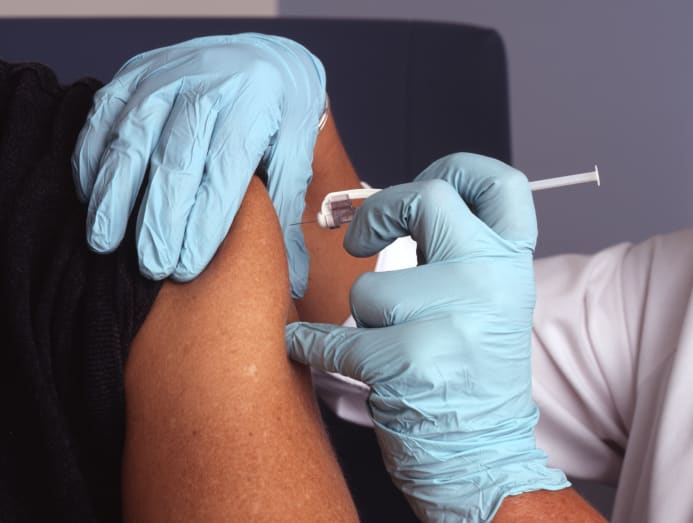
While some breakthrough cases amongst those who are fully vaccinated against COVID-xix are inevitable, they are unlikely to result in hospitalisation or death.
Only ane important question nearly quantum infection that remains unanswered is: Can the vaccinated develop then-called long COVID?
Long COVID refers to a set of symptoms – such every bit astringent fatigue, brain fog, headache, muscle pain and sleep problems – that tin persist for weeks or months after the active infection has ended.
The syndrome is poorly understood, butstudies advisethat between 10 per cent and thirty per cent of adults who catch the virus may experience long COVID, including those who experienced just mild illness or no symptoms at all.
But the vast majority of data collected nigh long COVID has been in the unvaccinated population. The risk of developing long COVID for the fully vaccinated who get infected after vaccination hasn't been studied.
Whilepreliminary researchsuggests that it is, in fact, possible for a quantum case to lead to symptoms that can persist for weeks to months, there are withal more questions than answers.
What percent of breakthrough cases upshot in lingering symptoms? How many of those people recover? Are the persistent symptoms after quantum infection every bit severe equally those that occur in the unvaccinated?
"I only don't think in that location is enough information," said Dr Zijian Chen, medical managing director at theCenter for Mail-COVID Careat Mount Sinai Wellness Organization in New York.
"Information technology'south also early on to tell. The population of people getting sick post vaccination isn't that high right now, and there'due south no practiced tracking mechanism for these patients."

1 recent report of Israeli health care workerspublished in the New England Journal Of Medicineoffers a glimpse of the risk of long COVID after a breakthrough infection.
Among i,497 fully vaccinated health intendance workers, 39 of them – about ii.vi per cent – adult breakthrough infections. (All of the workers were believed to be infected after contact with an unvaccinated person, and the study was conducted before the Delta variant became ascendant.)
While about of the breakthrough cases were balmy or asymptomatic, 7 out of 36 workers tracked at six weeks (19 percent) however had persistent symptoms.
These long COVID symptoms included a mix of prolonged loss of odour, persistent coughing, fatigue, weakness, laboured animate or muscle hurting.
But the study's authors caution against drawing also many conclusions from the research. The sample size – just seven patients – is small.
And the research was designed to study antibiotic levels in the infected, said Dr Gili Regev-Yochay, manager of the infectious disease epidemiology unit atSheba Medical Center.
It was not designed to study the take a chance of long COVID after a breakthrough infection.
"It was not the scope of this paper," Dr Regev-Yochay said. "I don't think we take an answer to that."
Still, the fact that one in five of the healthcare workers who had breakthrough infections still had lingering symptoms later 6 weeks appears to be the starting time indication from a peer-reviewed study that long COVID is possible after a breakthrough infection.
"People take said to me, 'You're fully vaccinated. Why are you being so careful?'" said Dr Robert Wachter, professor and chair of the section of medicine at the University of California, San Francisco.
"I'chiliad still in the camp of I don't want to get COVID. I don't want to go a breakthrough infection."
Dr Wachter said that despite the many limitations of the Israeli study, the data offer more prove that the vaccinated should proceed taking reasonable precautions to avoid the virus.
"I'm going to take information technology at face value that one in five people, half-dozen weeks after a breakthrough case, continued to feel crummy," Dr Wachter said.
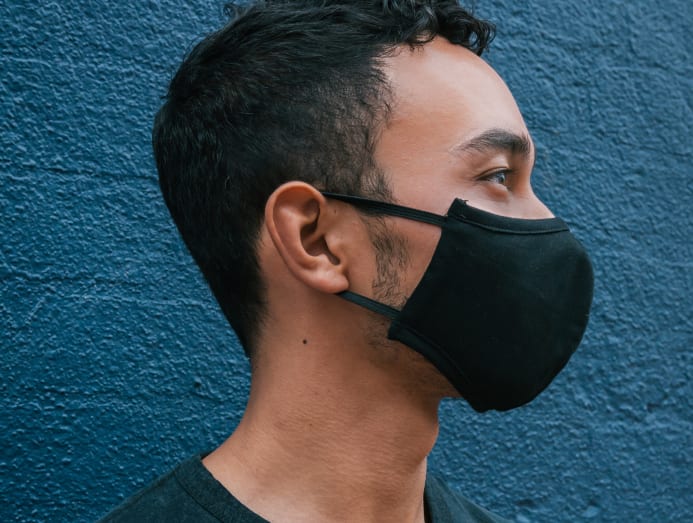
"That's enough to make me want to wear two masks when I go into the grocery shop, which is not that burdensome anyway."
Complicating the report of breakthrough infections is the fact that the U.s. Centers for Disease Command and Prevention (CDC) only tracks post-vaccination infections that effect in hospitalisation or death.
While the CDC does continue to study breakthrough infections in several big cohorts, the lack of data on all breakthrough cases remains a source of frustration amidst scientists and patient advancement groups.
"It's very frustrating not to have data at this point in the pandemic to know what happens to quantum cases," said Akiko Iwasaki, an immunologist at Yale School of Medicine, who is conducting studies of long COVID.
"If balmy breakthrough infection is turning into long COVID, nosotros don't accept a grasp of that number."
Diana Berrent, founder of Survivor Corps, aFacebook groupfor people affected by COVID-nineteen that has about 171,000 members, took an informal poll and found 24 people who said they had lingering symptoms after a quantum infection.
It's not a scientific sample, and the cases haven't been validated, but the poll shows the demand for more data on quantum cases, Berrent said.
"You can't extrapolate it to the general population, but information technology'south a very strong indicate that the CDC needs to exist mandating reporting of every breakthrough case," Berrent said. "We can't know what we're non counting."
But some experts predict the surge of new cases acquired past the spread of the Delta variant will, unfortunately, pb to more breakthrough cases in the coming months.
Dr Chen of Mount Sinai said it will take several months before patients with long COVID from a quantum infection are enrolled in studies.
"We're waiting for these patients to show upward at our doors," Dr Chen said.
Despite the lack of information, one thing is clear: Getting vaccinated volition reduce the take a chance of getting infected and getting long COVID, said Athena Akrami, a neuroscientist at University College London, who collected and published datafrom nearly 4,000 long COVID patientsafter developing long COVID herself after a March 2022 bout with COVID-xix.
"It's simple math," said Dr Akrami. "If yous reduce infections, so the likelihood of long COVID will drop automatically."
Past Tara Parker-Pope © The New York Times
This article originally appeared in The New York Times.
https://www.nytimes.com/2021/08/16/well/live/vaccine-long-covid-breakthrough-infection.html
Source: New York Times/bk
davisaccamented01.blogspot.com
Source: https://cnalifestyle.channelnewsasia.com/wellness/can-vaccinated-develop-long-covid-after-recovering-infection-276731
0 Response to "Can the vaccinated develop long COVID after recovering from infection?"
Post a Comment